Daylight comes late in Arizona. That state does not utilize Daylight Saving Time, so keeping track of the time of day can get complicated if you are trying to compare it with other places. In a laundromat in Kingman, they had two big clocks on the wall labeled Arizona Time and California Time.
I had looked forward to reaching southern Arizona. I wanted warm weather and to soak up the sun reclining in my camp chair. We went through Ajo, Arizona, and then Why, Arizona, and landed in the Sonoran Desert at Organpipe Cactus National Monument, just a few miles north of the the Mexican border. They had a developed campground there called Twin Peaks. It was quite luxurious compared to many of the places we had camped previously,. Twenty bucks per night was steep,but we got our America the Beautiful pass 50% discount, so we pulled in and took a spot. They had over 200 campsites there. All the roadways were graveled. Every campsite had a paved driveway, there was a water spigot right beside our camp, and a flush toilet restroom and trash receptacles were only two streets away. They also had free solar showers, but in January they were not warm. We had one day of warm weather when I dug out a pair of shorts and even braved the lukewarm showers. After that day, though, the shorts were useless and I added long johns under my jeans. The sun glared and I used a wide brim hat throughout the day, but a strong wind blew Arctic air straight out of the North. At night, the wind rocked the van and I wore a wool hat to bed. We stayed there 12 days, a record for us, mostly because we didn’t know where else to go that might be warmer. California was in the middle of heavy rain and flooding at that time.
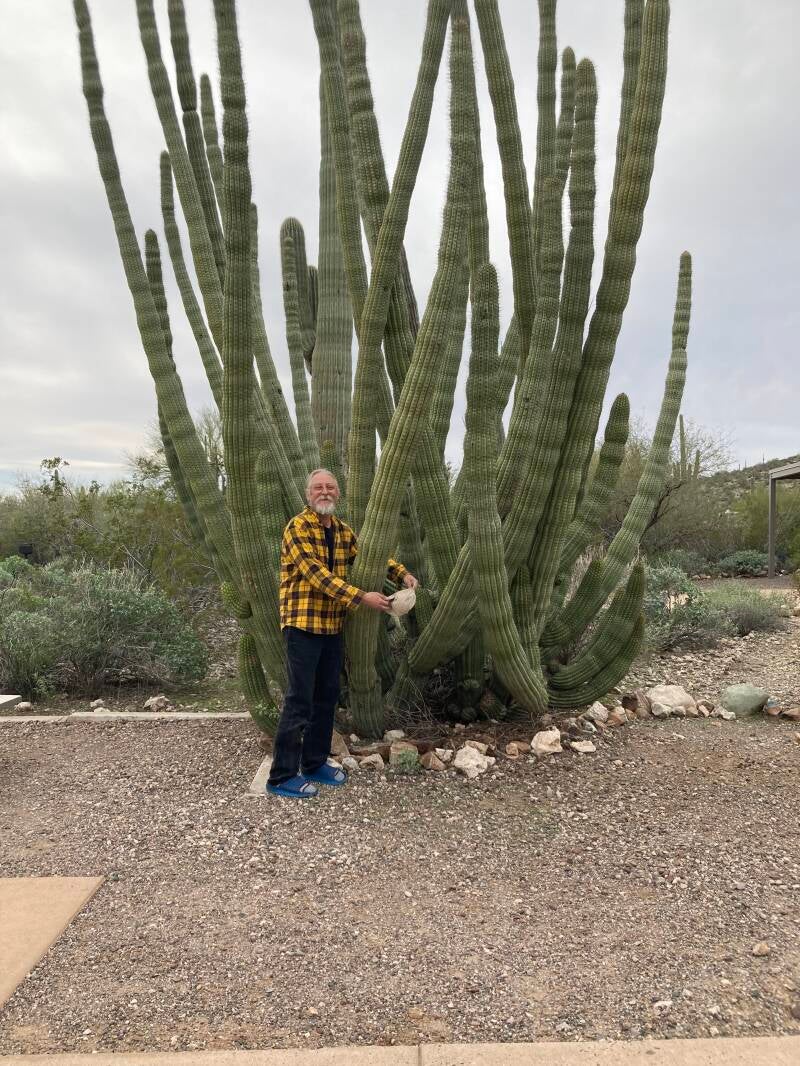
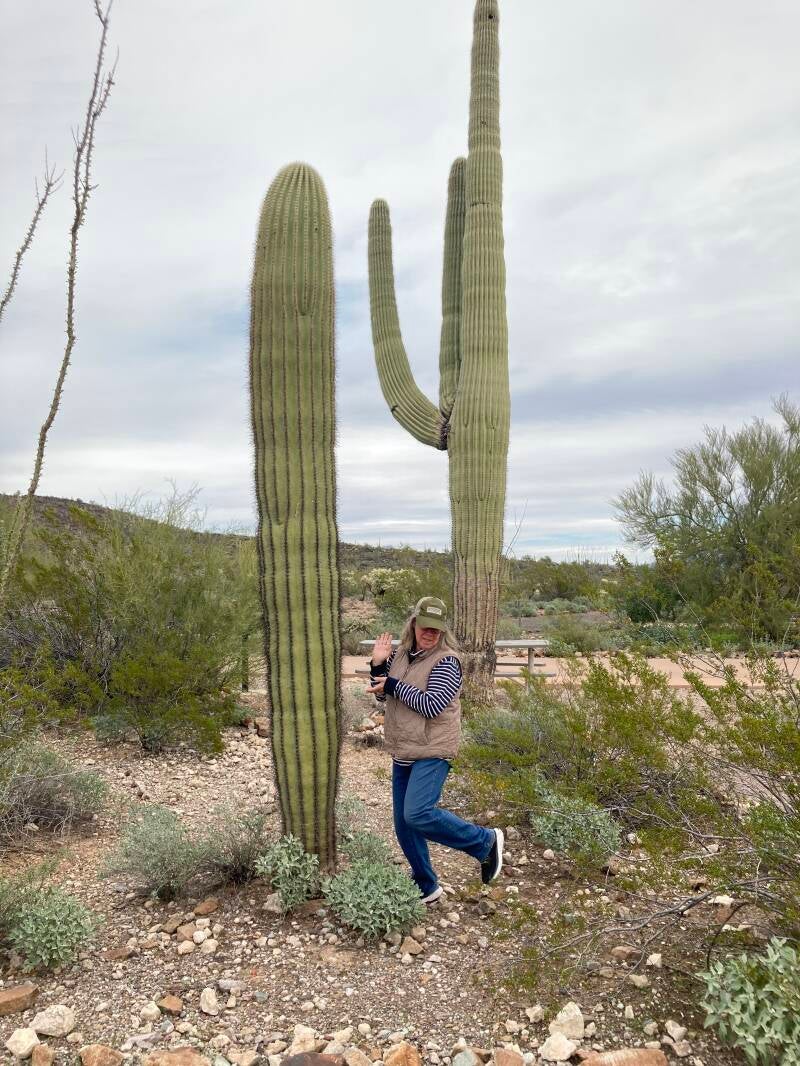
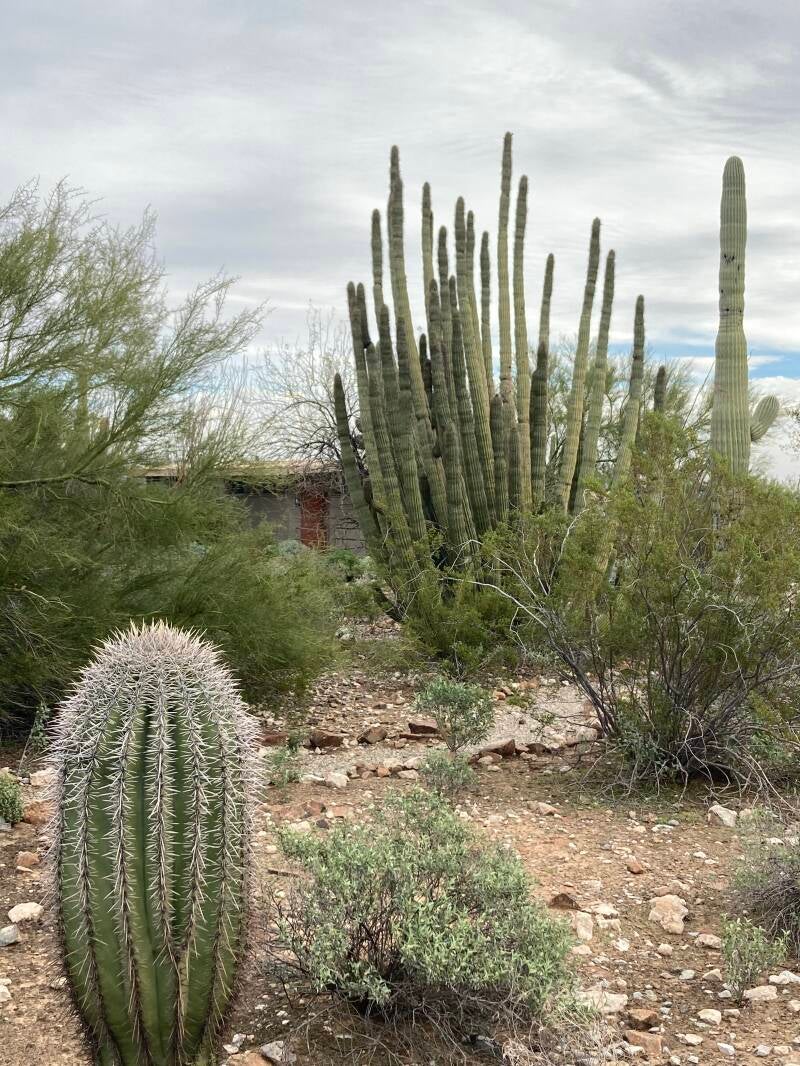
The weather was not what I had hoped for, but the campground and surrounding desert were truly beautiful. So much vegetation! Huge organpipe cactus, incredibly tall saguaro cactus, ocotillo, cholla, barrel cactus, prickly pear, palo verde trees, mesquite, creosote bushes, and other things that I don’t know the names for. Saw lots of quail running around peeping and a bird we didn’t recognize that sat at the top of the tall saguaro and sang a loud and complicated song. We did a lot of hiking around the camp and surrounding area. This particular area gets two monsoon seasons per year. First is the regular summer monsoon rains, but temperatures get super hot in the summer ( the solar showers had a sign that warned against the possibility of scalding water), and then in the winter they get a second dose of rainy weather because the Sea of Cortez is less than 100 miles away and brings in extra moisture. It’s no wonder the plants grow so plentifully and large.
This campground was filled with huge Class A motor homes—big buses with pullouts and canopies. Many people zoomed around on electric bikes and golf carts. Everybody walked one or two (or even three!!) dogs. I saw one motorcycle with a sidecar. It was a different world for us. We cooked in the van because of all the wind, and I collected dirty dishes and washed them once per day between 11am and 2 pm when it was warmest outside at the picnic table. We went to the outdoor amphitheater a few nights and listened to Ranger Talks about bat flight and the flora and fauna of the region. Interesting, but cold. After a few nights we skipped the programs and stayed inside. I worked on tax returns and studied the CA DMV handbook since I need to renew my drivers license with a written test.
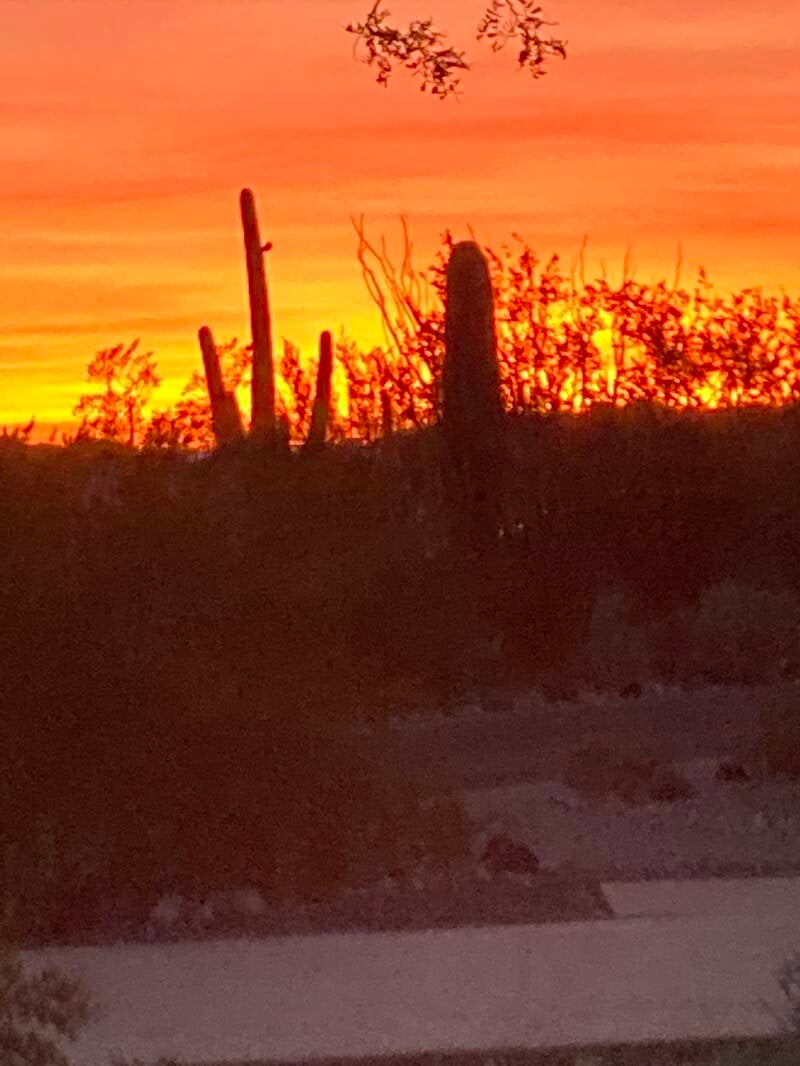
We did enjoy it here, despite the surprisingly cold daytime temperatures. (We knew it would be cold at night.). I never got used to the different quality of the light and the speed with which the days seemed to finish. Arizona sunsets are incredibly colorful, but they don’t linger. Watch it now, because Boom! It’s gonna be over in a flash.